Fatal Freight: Remastered
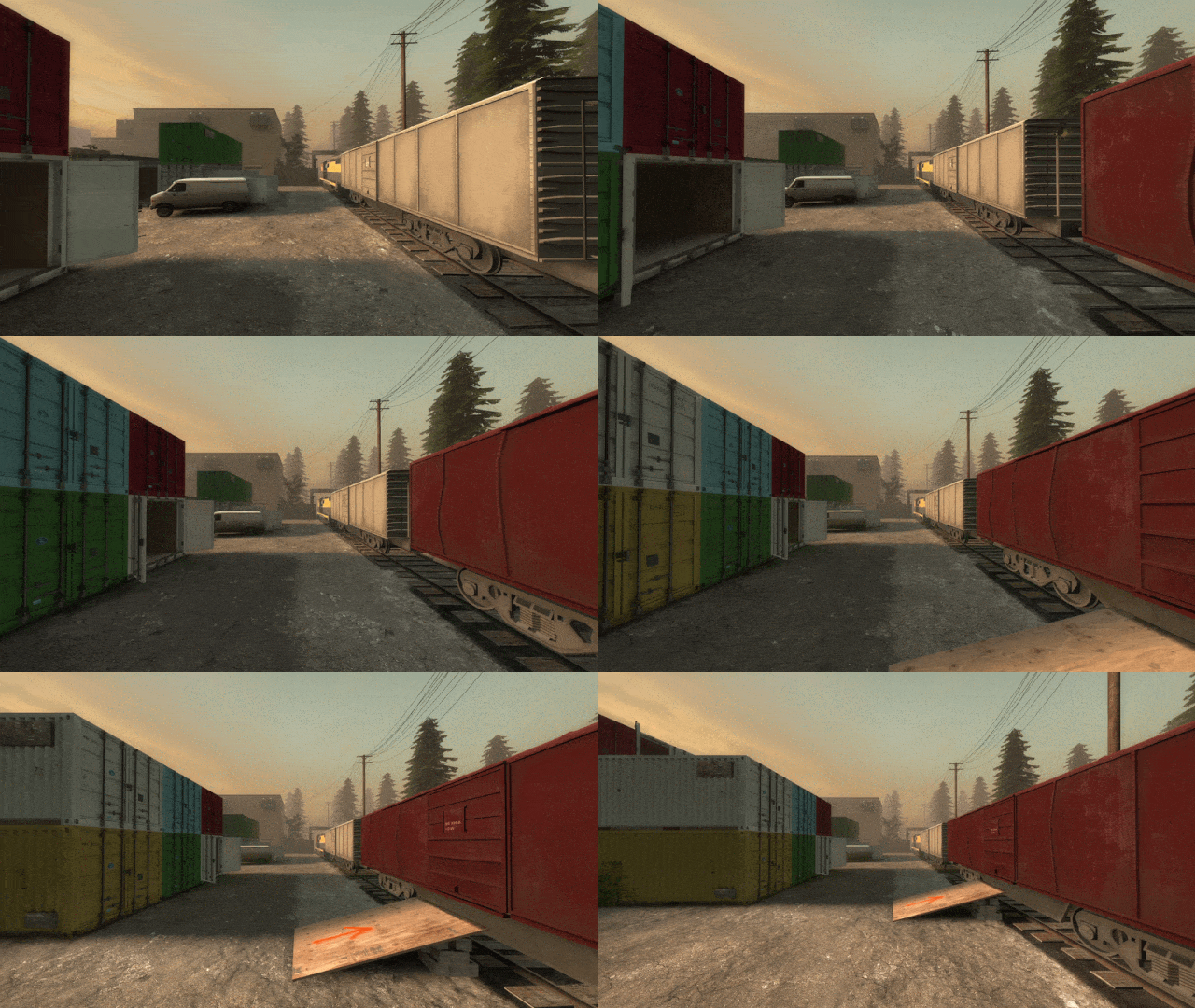
-
Game: Left 4 Dead 2
-
Genre: First Person Shooter
-
Type: Coop, Multiplayer
-
Created as a Personal Project - Solo development
-
Level Development Time: 6 months
-
Engine: Source
-
Original Release: Jan 9, 2015


Fatal Freight: Remastered is a 5-map custom campaign for Valve's LEFT 4 DEAD 2 that I created in 2015 and remastered in 2020. To date, it remains one of my most polished personal projects and has achieved a decent amount of popularity within the game's custom modding scene and is also regularly played by the game's competitive scene as well.
I chose to feature this level because it showcases my ability to design complex layouts that function for both singleplayer and multiplayer gameplay with specific emphasis on player leading, verticality, asymmetric design, and competitive balance.
————————————————————————————————————————————————————————————————
Production
The ultimate design goal of Fatal Freight is to have a level of gameplay and visual polish that is comparable to the official campaigns of the game. To achieve this, I studied the official campaigns and also referenced much of Valve's own developer commentary about the development process of Left 4 Dead.
In my own time playing the game, I grew very fond of the game's Versus Mode, a mode where one team plays as the human survivors, and the other as the infected. The goal of the human team is to make it to the end of the level, while the Infected try to stop them. I enjoyed the asymmetric nature of the experience and how the two teams' differing objectives and mechanics affected how they approached the level.
With Fatal Freight, I wanted to create a level that was fun to play in Versus and rivaled the experience delivered by the official campaigns.
————————————————————————————————————————————————————————————————
Design
Theory
Campaigns in Left 4 Dead function like both singleplayer and multiplayer experiences at the same time.
They play like singleplayer experiences in that the players progress through an environment toward an end goal, with player leading and story-related elements/narrative along the way.
At the same time, campaigns function like multiplayer experiences in that most areas that the players move through are designed in an arena-style, with multiple routes to reach the same destination, vertical gameplay elements, and a mixture of open areas and chokepoints to create interesting engagement opportunities.
Blockout


Montage
I compiled a montage video showing the development of many of the areas of the campaign, from the initial whitebox state to the final polished state:
Final Result


————————————————————————————————————————————————————————————————
Level Flow

1. Travel through the woods

2. Reach the old factory

3. Open the floodgate

4. Get to the overpass

5. Traverse the abandoned highway

6. Call the elevator

7. Reach the train depot

8. Survive the gauntlet

9. Refuel the generator

10. Escape!
————————————————————————————————————————————————————————————————
Gameplay
Traversal
Survivors follow a designated path through the level from the beginning to the end, with various special areas created for the infected. These areas can only be accessed by the infected, and allow them to traverse the level while remaining out-of-sight and take shortcuts to cut off the survivors.

The infected can traverse these rooftops to stalk and attack the survivors

Out-of-bounds regions that the infected can use to attack survivors from different parts of the level
Leading Elements
Lighting is used as a means to subtly guide the player through the level as well as occasional graphics and arrows. The framing of specific scenes also allows players to quickly discern where they need to go.
This is important to the gameplay, since random hordes occasionally spawn, punishing the survivors for taking too long. L4D also thrives on allowing players to explore the environment, picking up items and goodies to help them along their way, but this exploration can become random wandering if the player is not actually sure where they're meant to be going first.

After exiting this pipe, this light is visible in the distance that signals the intended path

This graffiti symbol informs players that the left path is intended. They can then decide to explore the area to the right knowing that it is optional
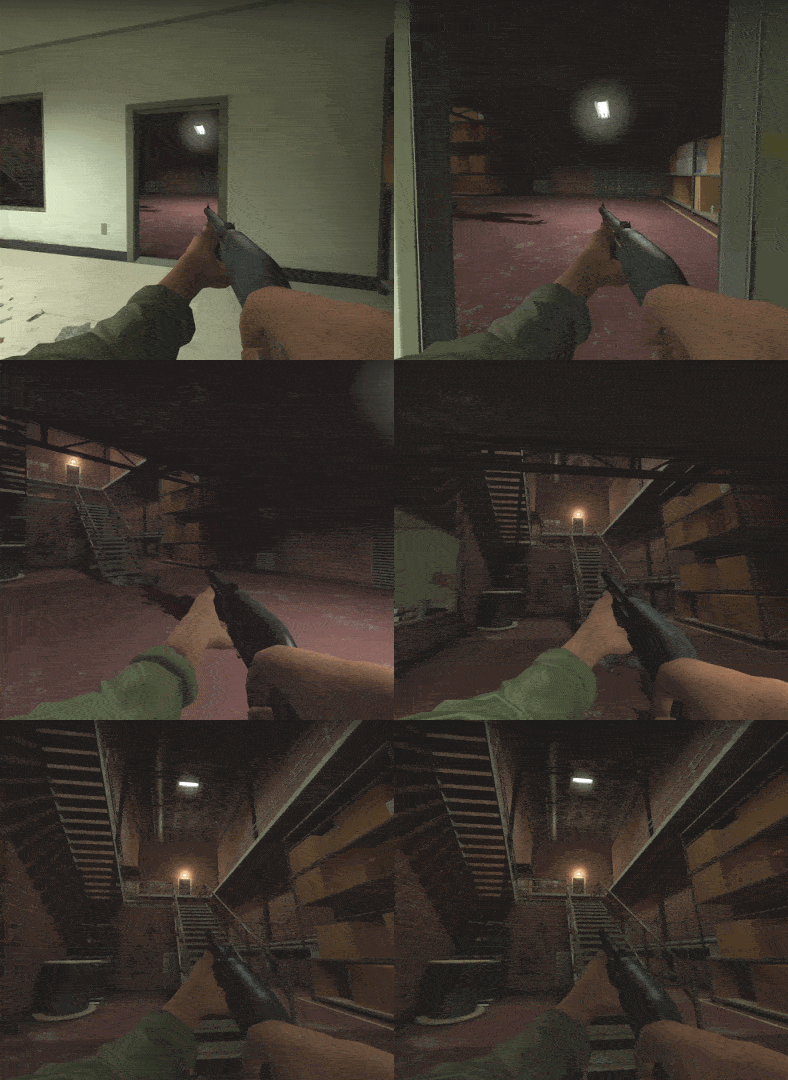
This light is framed so that it is visible the moment the player turns to enter this room

Arrows and lighting the guide the player
Horde Events
At specific points in the campaign, players arrive at a blocker, where passing it involves completing an encounter that pits them against a large horde of zombies. From a pacing perspective, these events are designed to slow down the survivors' progress and introduce an opportunity for the infected to whittle them down. They are also an exciting ramp up in the combat.

Open the floodgate and survive the horde. The button starts the event and the zombies enter the arena from the yellow arrows
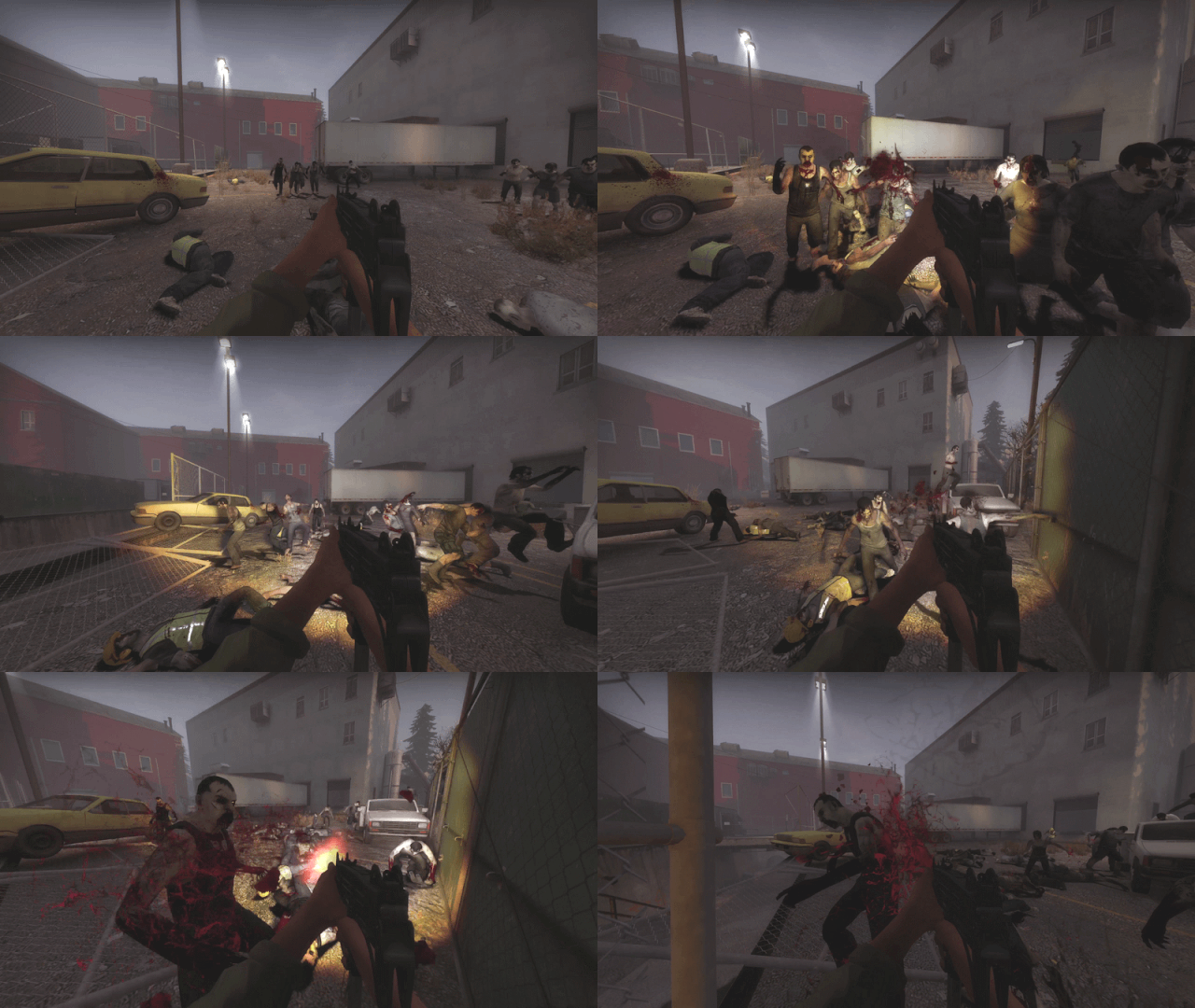
The horde attacks
Choke Points
The level layout is designed with various choke points to allow the infected players to surprise the survivors and deal damage to them. Each type of infected is different, and so some areas of the level have stronger potential for them than others. In Versus Mode, chokepoints provide moments of tension for both teams and can contribute to pivotal moments that swing the outcome of the match in one team's favor.

Survivors must climb this long ladder, leaving them vulnerable to attacks and damage from high falls

This window is a one-way drop, giving infected an opportunity to attack survivors while they are separated
Final Encounter
The campaign's finale is a forced combat event right at the end of the campaign that acts as a "boss fight" of sorts. The area is large, with lots of space to navigate and fight the horde, with specific holdout positions where players can fortify and defend themselves.
Fatal Freight's finale takes place in two stages:
Phase 1: Fill up the generator
In Phase 1, players find gas cans that they use to fill up a generator. The gas cans are spread around the area and spawn in random positions. The gas cans spawn in unfavorable locations that give the infected the chance to attack the survivors. Pouring gas into the generator also leaves players defenseless, requiring them to often go in pairs.

Gas cans that have spawned at a dead end, giving the infected a chance to trap the survivors

The generator has lots of supplies near it, acting as a small base, but is in a very unfavorable position for the survivors, due to lots of infected high ground nearby
Phase 2: Survive!
After filling up the generator, Phase 2 begins, and a massive horde of zombies spawns.
To complete this stage and beat the campaign, the survivors simply need to survive and fight two Tanks (a special type of boss infected). There are several fortified positions around the area that are ideal for this phase.

This spot contains supplies for the survivors, but requires them to drop to low ground, putting them in danger

This is another favorable holdout location, however the presence of the windows above add a vertical element and allow special infected to drop onto the survivors
————————————————————————————————————————————————————————————————
Playtesting & Iteration
I playtested Fatal Freight often with groups of friends and also competitive players, gathering feedback and insight on how to best create a solid experience for both the survivors and infected.
Some early complications with the original design were:
-
Players getting lost and not being sure where to go during high intensity moments
-
Players getting stuck on level geometry
-
Pathing issues for infected and survivors
-
Resource balancing for the survivors
I worked over the course of about a month to fix these issues, the hardest being the resource balancing. The levels are large, with lots of potential spawnpoints for ammo, grenades, and other resources. I had to iterate and test very often to figure out the correct weights for the randomizer to ensure that every playthrough felt like players had just the right amount of ammo to get through.
I fixed many of the navigation issues by adding (and sometimes removing) lights, to try to guide players along the path I wanted them to take. Several side rooms and side paths were also removed over the course of the campaign's development that often acted as a distraction to players.
After initial release, I continued to iterate on the campaign in response to reviews and feedback.
This video contains a full history of changelogs for the campaign over the course of its development and post release (seen at 16:25):
————————————————————————————————————————————————————————————————
Video Walkthrough